

In this episode of Things We Threw Away, we stay with rabbits and hares, but this time we follow them through objects.
After looking at the long relationship between humans, rabbits, hares, and the Easter bunny in the last episode, we now turn to twelve objects that carry these animals into very different places, materials, and stories. Some are small and intimate, like a hare-shaped Greek oil flask or a tiny bone bead from a Clovis context. Others appear in manuscripts, textiles, masks, jade ornaments, and decorated ceramics, where rabbits and hares become symbols, companions, hunted animals, tricksters, decorative motifs, or strangely powerful figures.
Together, these objects show how one animal can move through many worlds. A hare can be food, a material, an image, a joke, a luxury motif, a protective sign, or a character in a visual story. By looking closely at these objects, we ask what happens when humans do not only live alongside animals, but also shape them into things, images, and meanings.
So, join us as we continue down the rabbit hole, this time through twelve archaeological and historical objects that show how rabbits and hares travelled across cultures, collections, and imagination.
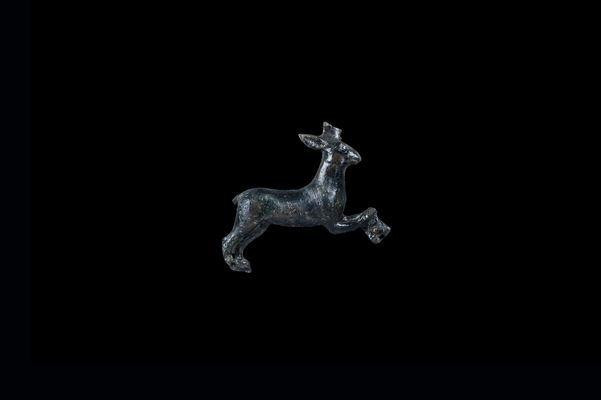
1. Vase handle in the shape of a hare
The little hare was used as a decorative element on a bronze vessel, possibly a lebes or a tripod vase. It’s 6cm tall and can be dated to the 6th century BC. The hare is portrayed in a running pose.
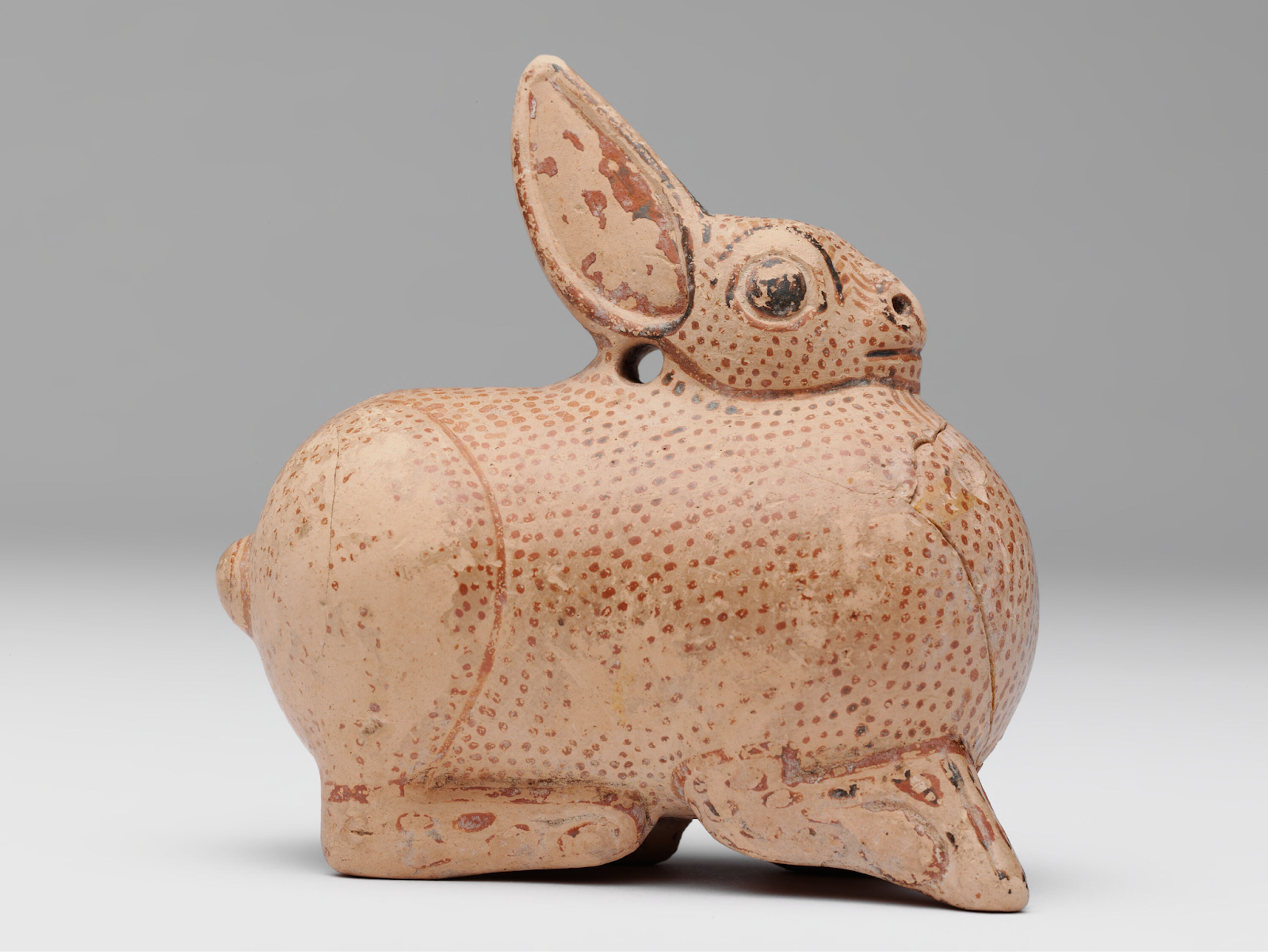
2. Ancient Greek hare aryballos
This small terracotta aryballos (an oil or perfume flask) was probably made in Corinth between 650 and 600 BCE. It is shaped like a crouching hare, with orange and dark-brown slip details over a pale terracotta body.
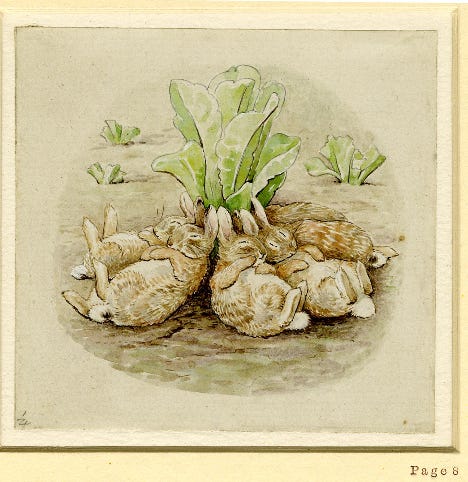
3. Drawing, The Tale of the Flopsy Bunnies
This drawing by Beatrix Potter is part of her story “The Tale of the Flopsy Bunnies”. It is one of the sequels to the Peter Rabbit stories. We see six bunnies asleep around a lettuce patch, this is the Flopsy family. The drawing is from 1909 and now part of the British Museum collection.
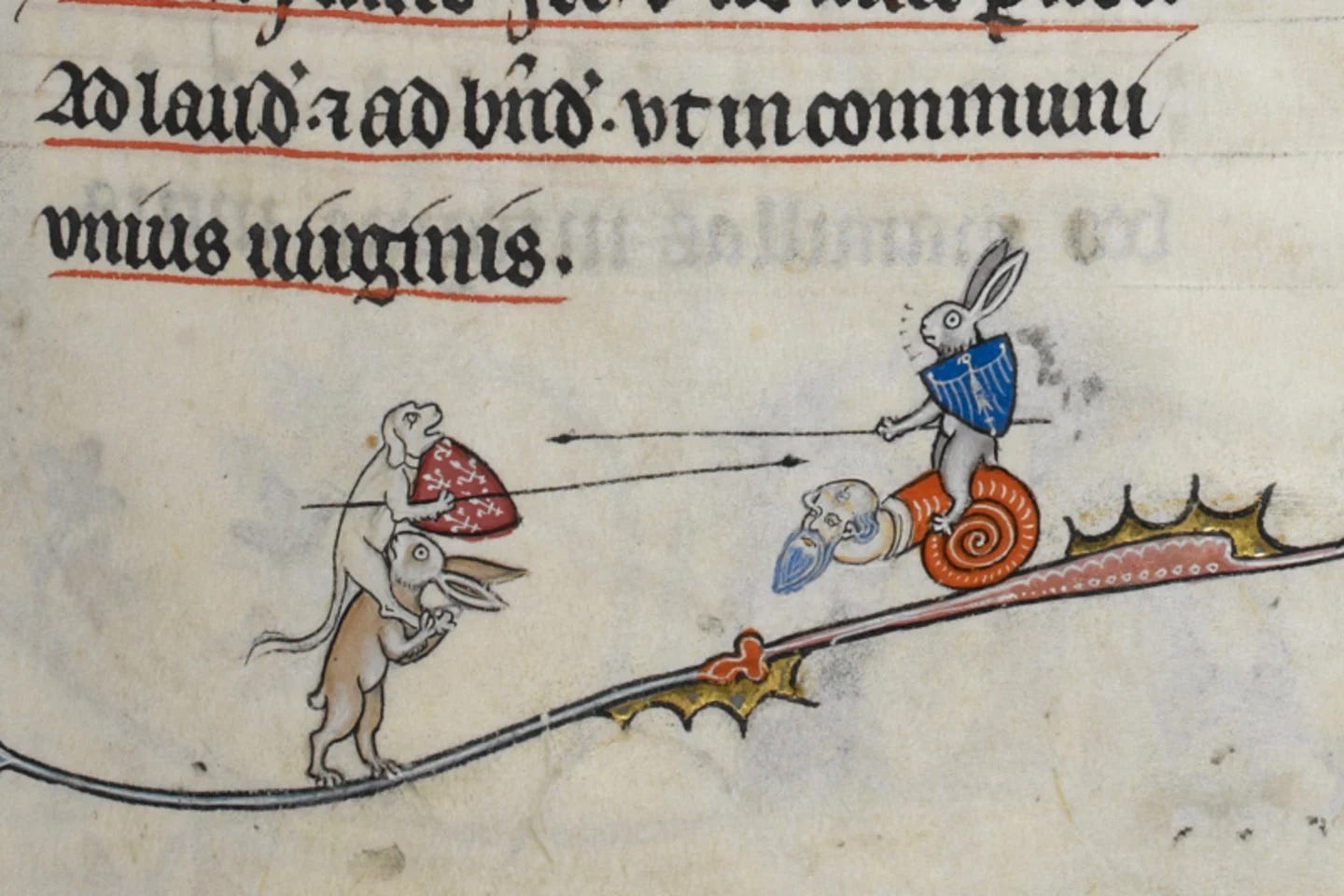
4. Medieval manuscript, Breviary of Renaud de Bar
The Breviary of Renaud de Bar is a parchment manuscript made in Metz between 1302 and 1303. On it are devotional text with lively animal scenes in between, one of them shows an armed dog on the shoulders of a rabbit fighting against an armed rabbit riding a man with a snail body.
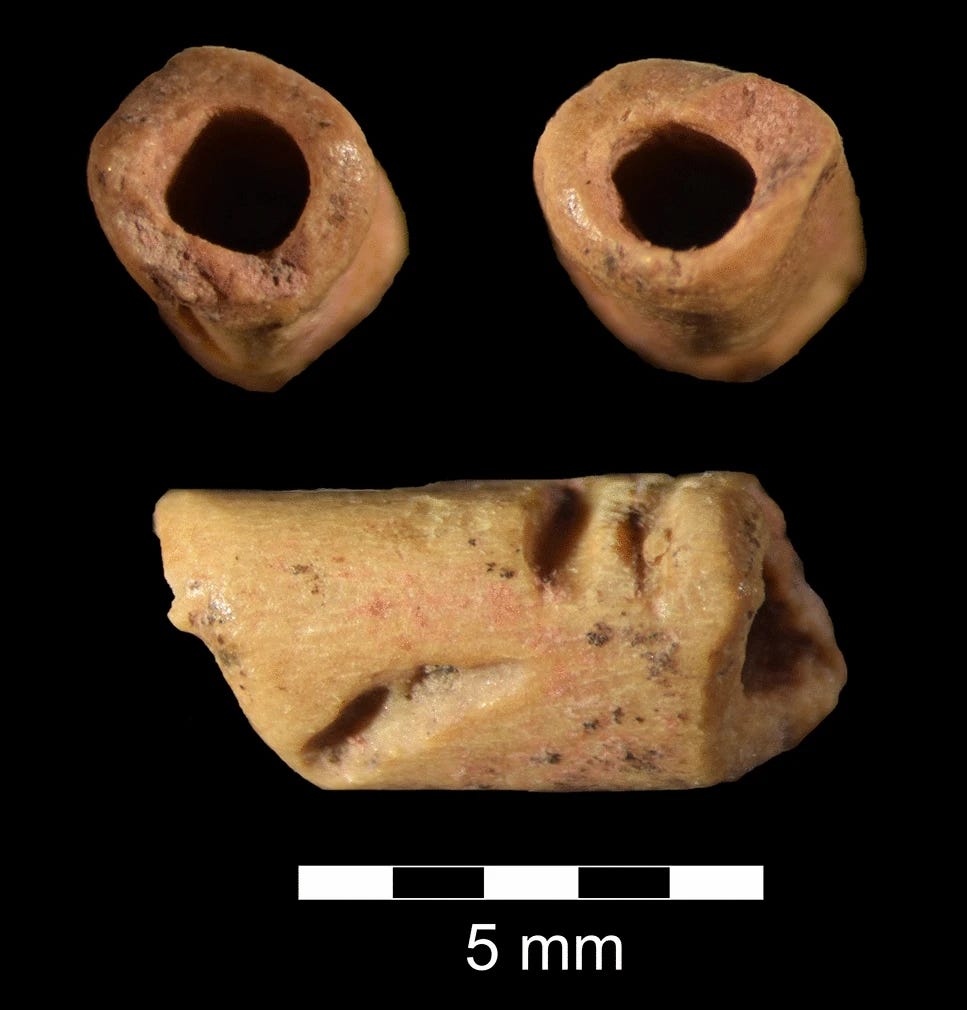
5. Bone Bead
This tiny tubular bone bead from the La Prele Mammoth site in Wyoming dates to about 12.940 BP and was recovered from a hearth-centred Clovis-age activity area. ZooMS collagen analysis identified the raw material as lagomorph bone, most closely matching hare, making it evidence for the use of hares by Clovis foragers.
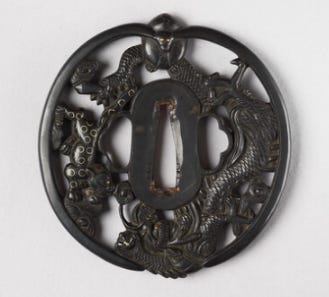
6. Tsuba with a hare, dragon, and tiger
This item is attributed to the Umetada School (16th to 19th century) from Japan and is dated to the 1st half of the 18th century. The oval outline is formed by the long ears of the hare. Inside the shape, there is a dragon and a tiger. It was bequeathed to the museum in 1929 by Dame Jemima Church.
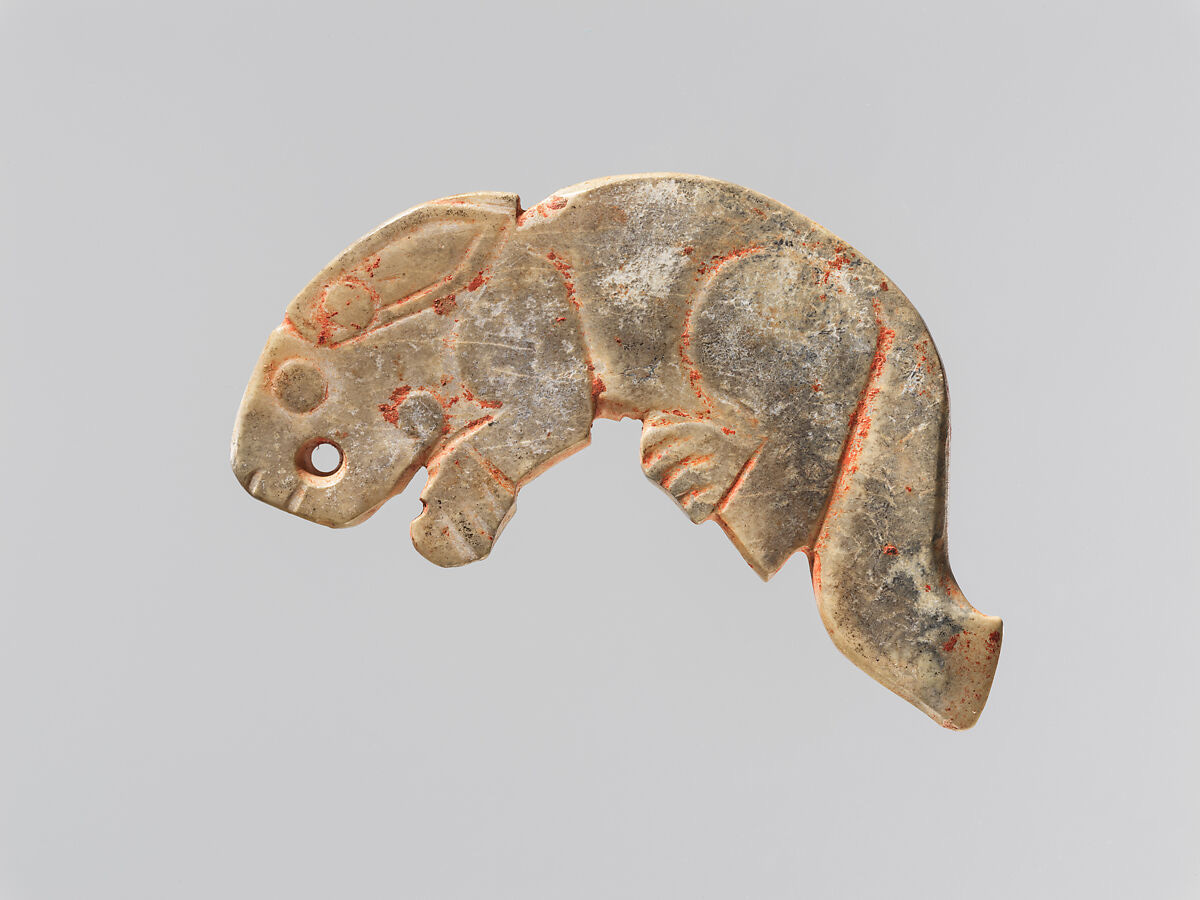
7. Plaque in the shape of a rabbit
This small jade plaque from China dates to the Shang to Western Zhou period and is among the earliest known rabbit representations from China’s Bronze Age. Its compact size and small perforation suggest that it was probably worn or suspended as a pendant.
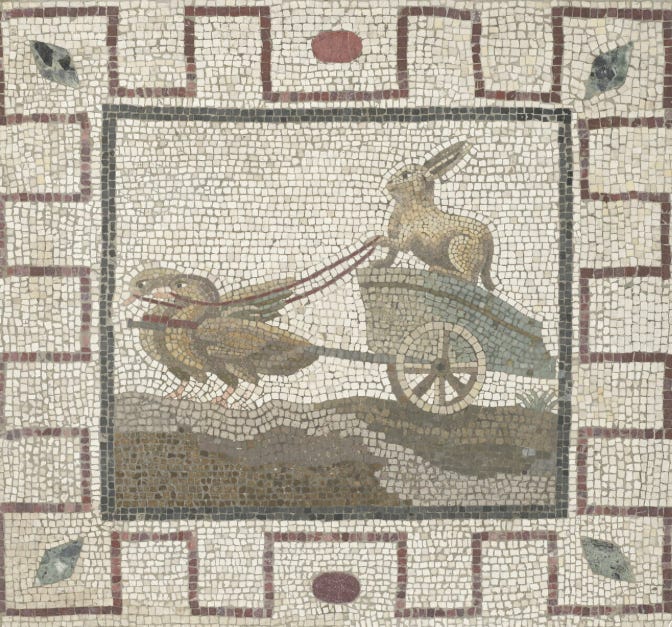
8. Rabbit Chariot Mosaic
This Roman mosaic shows a hare riding a chariot, pulled by two ducks. The provenance is uncertain, but most likely it came from Italy to the Louvre. It measures 57 x 61.5cm.
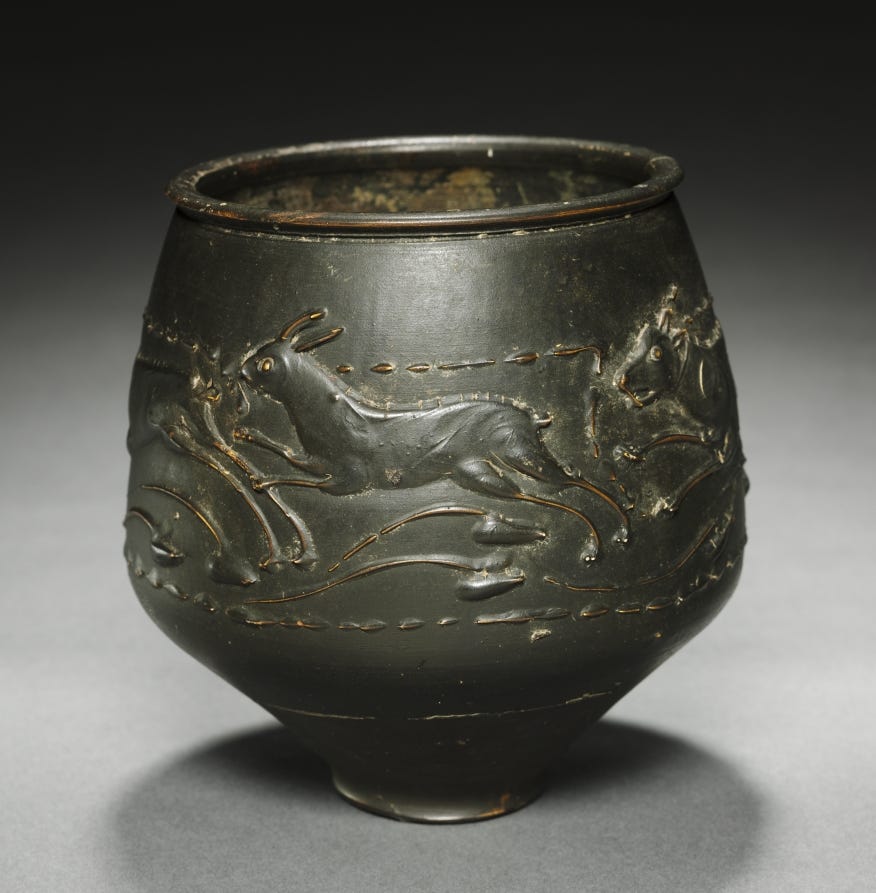
9. “Caster Ware” vase with hunt scene
This mid-second-century CE Gallo-Roman ceramic vessel from Cologne (Germany) is reddish ware made with black burnished slip and barbotine decoration. It shows three animals that wrap around the vessel with a stag, doe, hare, and hound, appearing in that way as a kind of “endless” hunting scene. The animals were piped by hand rather than applied from a mould.
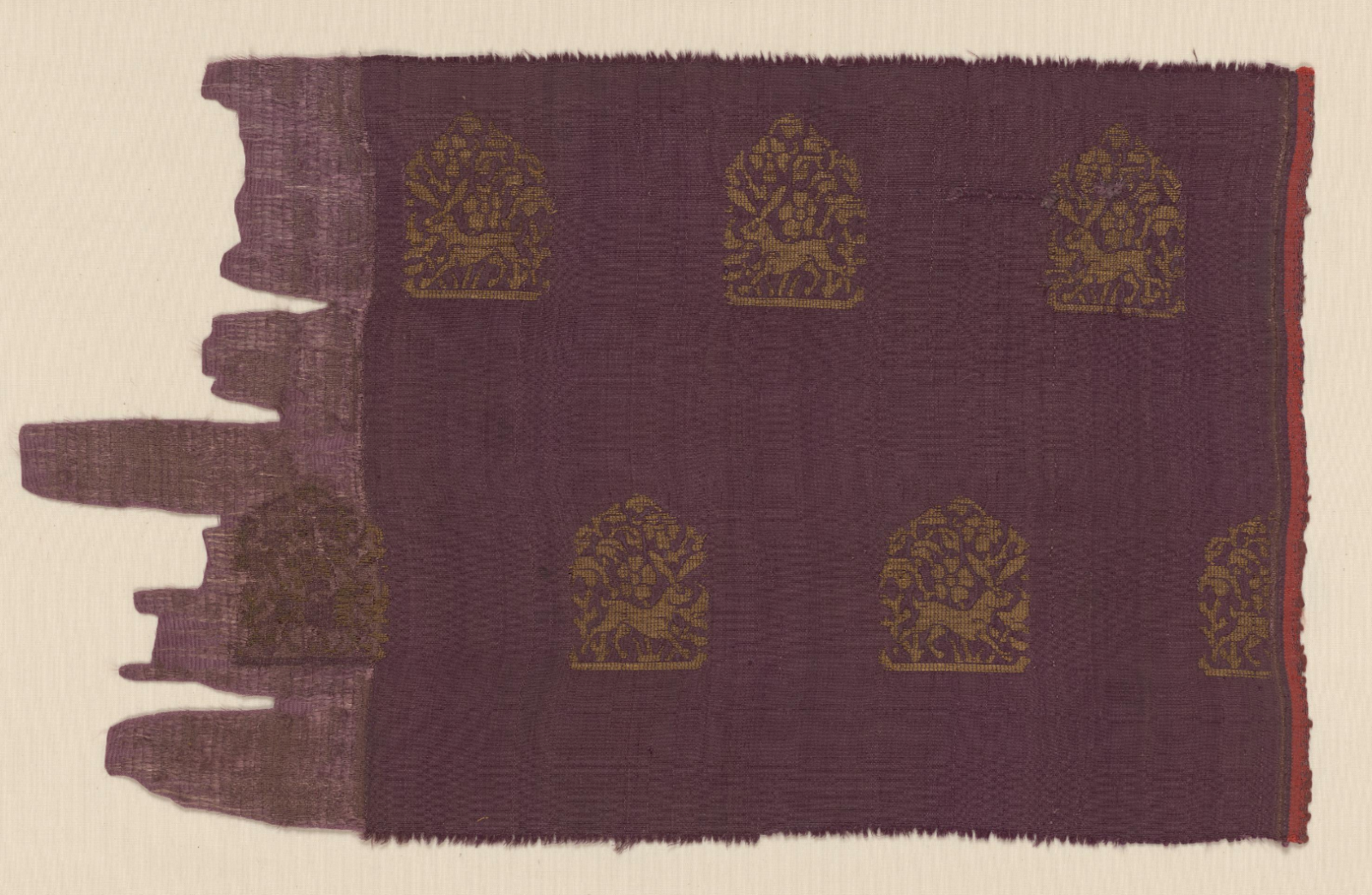
10. Brocade with Hares
This silk brocade from Northern China dates to the 1200s to mid-1300s CE, which is the Yuan dynasty. It is woven in tabby with brocaded gold thread. The hares among bushes may refer to Khitan, Jurchen, and Mongol hunting practices, while the textile structure also shows eastern Iranian craft influence within a Mongol-period object.
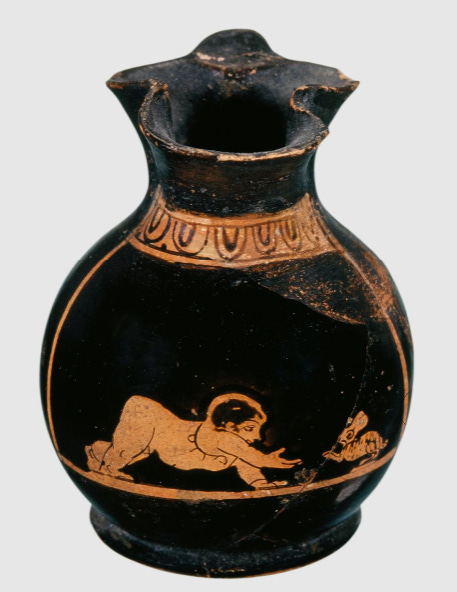
11. Red-figure Chous, showing a child with hare
This red-figure vase (most likely a chous) shows a child wearing amulets trying to reach out to a hare. The hare seems to mimic the child’s pose by also stretching its front legs towards the child. The vase can be dated to 475-425 BC.
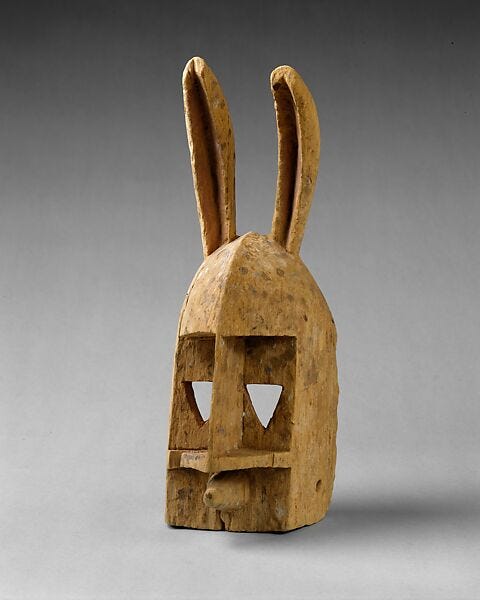
12. Rabbit (Dyommo) Mask
This Dogon rabbit mask, or dyommo, was made from wood and pigment in Mali’s Bandiagara region and dates broadly from the nineteenth to the mid-twentieth century. Its narrow face and tall ears translate the rabbit into a mask form within a wider Dogon masquerade tradition, where rabbit figures may appear as agile and cunning counterparts to hunter masks.
Credits
Intro and outro music: “Meeting for Two – Background Music for Video Vlog (Hip Hop version, 43s)” via Pixabay Music by White_Records
Research behind the script: Jona Schlegel and Stefanie Ulrich
Editing and post-production: Jona Schlegel
Cover art: Stefanie Ulrich
Things We Threw Away – Where to Find the Podcast
TWTA on Substack – Updates, transcripts, and reflections from the project
TWTA on Spotify – Listen and follow via Spotify
TWTA on Apple Podcasts – Available through the Apple Podcasts directory
TWTA on Instagram – Visual updates, behind the scenes, and illustrated content
TWTA on Bluesky – Public discussions, reflections, and cross-links
Projects by the team members
Jona Schlegel
Follow on Instagram (@archaeoink): Visual science communication through illustration, websites and archaeology
jonaschlegel.com: Portfolio and background on archaeological communication, coding, and design
archaeoink.com: Illustrated archaeology, blog posts, newsletter, and research-based visual storytelling
Stefanie Ulrich
Follow on Instagram (@layers.of.the.past): Photography of archaeological objects, and material encounters with a special focus on ancient Rome


